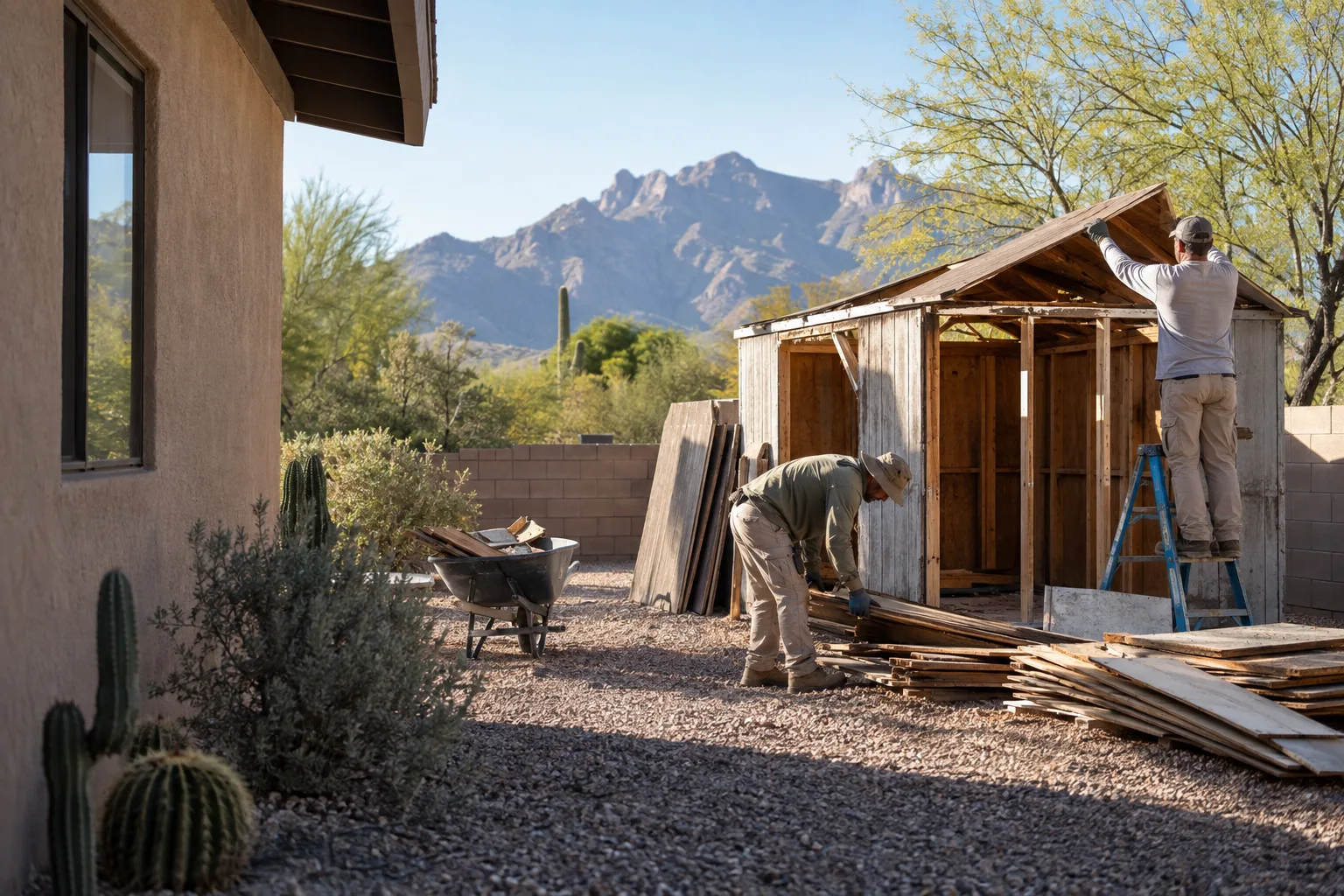
Complete shed dismantling and load-out planned around the structure, utility status, foundation, yard access, and the condition you want afterward.
What can be assessed
Freestanding wood, metal, resin, and plastic storage sheds can be assessed for dismantling and removal. Attached structures, active utilities, hazardous materials, retaining elements, and foundation work need to be identified separately.
Before the estimate
Empty the shed unless contents removal is part of the request. Photograph every side, the interior, roof, base, anchors, nearby utilities, and the full route to the loading point.
From standing shed to an agreed finish
Show
Document the whole shed
Wide photographs establish size, material, condition, and nearby obstacles. Close views explain anchors, damage, and connections.
Check
Resolve utilities and exceptions
Power, plumbing, gas, solar, chemicals, cylinders, and unknown materials need to be identified before scheduling.
Plan
Set the dismantling and load-out path
The work sequence should account for the shed material, gate width, carry distance, surfaces, and legal loading point.
Finish
Confirm what stays
State whether the base, anchors, shelving, contents, and loose debris remain or leave under the agreed scope.
Build a clearer removal brief
Use the estimate checklist to collect the measurements, photographs, access notes, and finish details that matter for this scope.