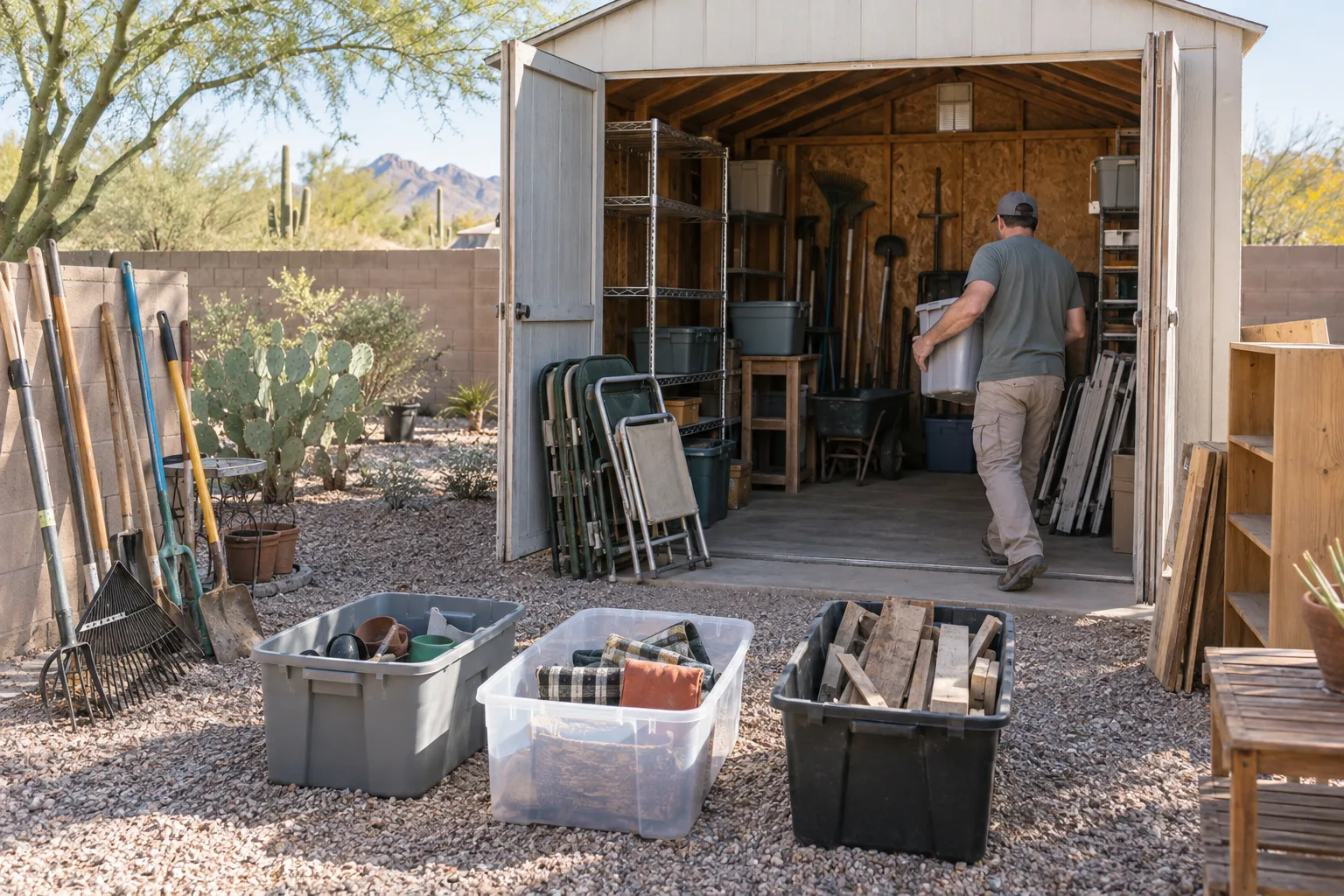
Shed contents removal planned item by item, with ordinary household and yard goods separated from restricted materials, personal property, and the structure itself.
What can be assessed
Ordinary stored items such as empty shelving, garden tools, bins, scrap lumber, small furniture, and general household goods can be assessed. Chemicals, fuel, paint, batteries, cylinders, pesticides, unknown liquids, and hazardous materials require separate direction.
Before the estimate
Mark what stays, what leaves, and what is still uncertain. Photograph the full interior before moving items, then provide close views of labels, heavy objects, sharp material, and anything that may have special disposal requirements.
Sort the contents before the shed
Keep
Set personal property aside
Use a separate area for items that stay so the removal boundary is visible before work begins.
Identify
Pull out restricted questions
Photograph labels on chemicals, batteries, paint, fuel, cylinders, and unknown containers without mixing them into ordinary debris.
Measure
Show volume and heavy items
Wide interior views and item dimensions help explain the number of loads and the handling route.
Confirm
Separate cleanout from demolition
State whether the request covers contents only, attached shelving, the shed structure, or a combination.
Build a clearer removal brief
Use the estimate checklist to collect the measurements, photographs, access notes, and finish details that matter for this scope.